
Louisiana, Freedmen's Bureau Field Office Records, 1865-1872
The Bureau of Refugees, Freedmen, and Abandoned Lands (often called the Freedmen’s Bureau) was created in 1865 at the end of the American Civil War to supervise relief efforts including education, health care, food and clothing, refugee camps, legalization of marriages, employment, labor contracts, and securing back pay, bounty payments and pensions. These records include letters and endorsements sent and received, account books, applications for rations, applications for relief, court records, labor contracts, registers of bounty claimants, registers of complaints, registers of contracts, registers of disbursements, registers of freedmen issued rations, registers of patients, reports, rosters of officers and employees, special and general orders and circulars received, special orders and circulars issued, records relating to claims, court trials, property restoration, and homesteads. This collection corresponds with NARA microfilm publications M1905 and M1483, Records of the Field Offices for the State of Louisiana and New Orleans, Bureau of Refugees, Freedmen, and Abandoned Lands, 1865-1872.
Louisiana, Freedmen's Bureau Field Office Records
What is in This Collection?
This collection consists of scanned images of records from National Archives microfilm publications M1905 Louisiana Records of the Field Offices for the State of Louisiana, Bureau of Refugees, Freedmen, and Abandoned Lands and M1483 New OrleansRecords of the New Orleans Field Offices, Bureau of Refugees, Freedmen, and Abandoned Lands which is part of Record Group 105 Records of the Bureau of Refugees, Freedmen and Abandoned Lands. The images are generally arranged in the order the records were microfilmed with the records of the Assistant Commissioner who oversaw Bureau operations in the state and state level staff officers; Bounty Agent,Commissary of Subsistence, Provost Marshall General of Freedmen, Quartermaster, Surgeon in Chief, Plantation Department , first then the local field office records are arranged alphabetically by location and by NARA roll number.
A table listing where the Louisiana field offices were located, the names of the employees, what office they held, and the dates they served can be found at Freedmen's Bureau Louisiana Field Office Personnel.
Sub-districts as of February 12, 1867
1st -Sub-district: Headquarters: New Orleans: Orleans, Jefferson, St. Bernard, Plaquemines, St. Charles, St. James, St. John the Baptiste, Ascension, Assumption, Terrabonne, Lafourche, St. Helena, Livingston, Washington, and St. Tammany
2nd Sub-district: Headquarters: Baton Rouge: Iberville, East Baton Rouge, Baton Rouge: West Baton Rouge, Pointe Coupee, East Feliciana, West Feliciana.
3rd Sub-district: Headquarters: Opelousas: St. Landery, Calcasieu, Vermillion, Lafayette, St. Mary’s and St. Martin’s.
4th Sub-district: Headquarters: Natchitoches: Natchitoches, Sabines, Rapides, Winn and Avoyelles
5th Sub-district: Headquarters: Monroe: Union, Morehouse, Ouachita, Jackson, Franklin, Caldwell, Catahoula.
6th Sub-district: Headquarters: St. Joseph: Madison, Tensas, Concordia, Caroll,
7th Sub-district: Headquarters: Shreveport: Bossier, Caddo, DeSoto, Claiborne, Bienville.
Selected Staff Officer records with Freedmen and Refugees names
Offices of Staff Officers (Bounty Agent)
- Roll 1, Registers of Claims Received, 3 volumes, Registers of Claimants, volume 1
- Roll 2, Registers of Claimants, volume 2
- Roll 3, Registers of Payments, 3 volumes
Provost Marshall General of Freedmen
- Roll 7, Registers of Proceedings in Freedmen's Court, 2 volumes, Registers of Complaints, 3 volumes, Complaints, 2 volumes
- Roll 8, Registers of Houses Occupied by Soldiers' Families, Registers of Concepts, Registers of Refugees, Indentures of Orphan Children
- Roll 9, Registers of Contracts
Subordinate Office Plantation Department
- Roll 27, Registers of Black Persons, volumes 1-2,A-D
- Roll 28, Registers of Black Persons, volumes 3-7,E-N
- Roll 29, Registers of Black Persons, volumes 8-11,O-Z
- Roll 29, Freedmen's Employment Registers, 2 volumes
- Roll 30-39, Registers and Payrolls of Freedmen Employed on Plantations
- Roll 39, Freedmen's Labor Contracts
- Roll 40-51, Labor Contracts (Agreement with Freedmen)
- Roll 52, Lists of Contracts with Freedmen
- Roll 52, Daily Record of Cotton Picked on the Corondolet Plantation
- Roll 52, Register of Payrolls of Freedmen on Plantations
Surgeon in Chief (report)
- Roll 24, Weekly Reports Received from Surgeons Concerning Cholera Cases
- Roll 25, Registers of Patients
- Roll 26, Employee Contracts
New Orleans Freedmen’s Hospital
- Roll 7, Register of Contrbands in Corps d’ Afrique General Hospital, Register of Patients, Registers of Sick and Wounded, Register of Disabled Destitutes Sick, etc., Register of Interment at Freedmen’s Cemetery, Register of Prescriptions
Home Colonies
Bragg Home Colony
- Roll 67, Register of Departures, Registers of Rations and Clothing Issued, Register of Marriages, Registers of Applications for Laborers
Greenville Colony
- Roll 79, Register for Contrabands
McHatton Home Colony
- Roll 83, Registers of Arrivals and Departures
Rost Home Colony
- Michael F. Knight The Rost Home Colony: St. Charles Parish, Louisiana. Prologue: the Journal of the National Archives 33 (Fall, 2001): 214-220. FS Library 972 B2p v.33 2001
- Roll 98, Register of Arrivals and Departures, Records of Births and Deaths, Register of Applications for Laborers, Register of Sick and Wounded Refugees and Freedmen
Military Districts On March 2, 1867 Congress created five military districts in the Southern States. Some of the records of these military districts found in Record Group 393 may relate to records of the Freedmen's Bureau. The links below to the National Archives Catalog will provide a history of the fifth district and links to record descriptions.
General Information about Freedmen's Bureau Records
The Bureau of Refugees, Freedmen, and Abandoned Lands was established in the War Department in March of 1865. It was commonly called the Freedman’s Bureau and was responsible for the management and supervision of matters relating to refuges, freedmen, and abandoned lands. The Bureau assisted disenfranchised Americans, primarily African Americans, with temporal, legal and financial matters, with the intent of helping people to become self-sufficient. Matters handled included the distributing of food and clothing; operating temporary medical facilities; acquiring back pay, bounty payments, and pensions; facilitating the creation of schools, including the founding of Howard University; reuniting family members; handling marriages; and providing banking services. Banking services were provided by the establishment of the Freedman’s Saving and Trust Company, or Freedman’s Bank.
The Bureau functioned as an agency of the War Department from approximately June 1865 until December 1868. In 1872, the functions of the Bureau were transferred to the Freedmen’s Branch of the Adjutant General’s Office. The Bureau assisted over one million African Americans, including many of the nearly four million emancipated slaves, which was over 25% of the population of former slaves in America.The records identify those who sought help from the Bureau at the end of the Civil War. Most supplicants were freed slaves, some of which were military veterans. In addition, a few veterans who were not African Americans also sought help from the Bureau. Freedmen’s Bureau records are usually reliable, because the records were supplied through first-person correspondence or the recording of a marriage.
Related Articles
- Dr. Shelly Viola Murphy, Let Freedom Ring Family Tree Magazine 23 # 3 (May-June 2022): 50-56. FS Library 973 D25ft V23. Issue 3
- Sharon Batiste Gillins.A Window into the lives of black and white ancestors: Freedmen's Bureau field office records. NGS Magazine 39 #1 (January-March 2013): 34-38.
- Sharon Batiste Gillins. Navigating Freedmen's Bureau Records for Research Success NGS Magazine 47 #2 (April-June 2021): 27- 35.
National Museum of African American History & Culture
The museum is working with the Smithsonian Transcription Center and volunteers to transcribe the records of the Bureau.
- Freedmen's Bureau Transcription Project.
- About The Freedmen's Bureau Database Records
- FREEDMEN'S BUREAU ABBREVIATIONS, STAFF ROSTERS, AND STYLE SHEETS
- Freedmen's Bureau - Browse Projects
Additional records and/or images may be added to this collection in the future.
To Browse This Collection
| You can browse through images in this collection using the waypoints on the Collection Browse Page for Louisiana, Freedmen's Bureau Field Office Records, 1865-1872. |
Collection Content
Sample Images

1865 Endorsement

Hospital Register of Patients
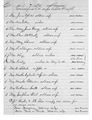
Houses Occupied by Soldiers' Families
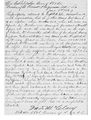
1867 Letter
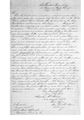
1865 Letter

1867 Widow's Claim
_Endorsement_DGS_7641601_271.jpg)
_Hospital_Register_of_Patients_DGS_4139955_73.jpg)
_Houses_Occupied_by_Soldiers'_Families_DGS_7641597_171.jpg)
_Letter_DGS_4139956_82.jpg)
_Letter_DGS_7641601_132.jpg)
_Widow's_Claim_DGS_7641590_224.jpg)
Record Types
The Bureau of Refugees, Freedmen, and Abandoned Lands (often called the Freedmen’s Bureau) created many different record types necessary to supervise relief efforts including education, health care, food and clothing, refugee camps, legalization of marriages, employment, labor contracts, and securing back pay, bounty payments and pensions. These records include letters and endorsements sent and received, account books, applications for rations, applications for relief, court records, labor contracts, registers of bounty claimants, registers of complaints, registers of contracts, registers of disbursements, registers of freedmen issued rations, registers of patients, reports, rosters of officers and employees, special and general orders and circulars received, special orders and circulars issued, records relating to claims, court trials, property restoration, and homesteads.
- The following link will provide a description of the record types found in this and other Freedmen's Bureau collections. Freedmen's Bureau Record Types
Officer's Manual
The War Department published an Officer's Manual to assist bureau personnel in the records that were required to be keep in bureau offices.
The following Wiki articles are transcriptions of portions of the manual
- US, NARA, Freedmen's Bureau, Officer's Manual - I, Book Keeping and Official Correspondence
- US, NARA, Freedmen's Bureau, Officer's Manual - IV, Medical Department
- US, NARA, Freedmen's Bureau, Officer's Manual - V, Subsistence
- US, NARA, Freedmen's Bureau, Officer's Manual - VI, Miscellaneous Provisions - Includes Reports from Assistant Commissioners
Inventory
Collection descriptions for the browse images may be located in either the published National Archives preliminary inventory with the "Entry No." or the National Archives Catalog Online Public Access Catalog "OPA." with the National Archives Identifier "NAID" number. Inventory
Collection Details
Location of Original Records
National Archives and Records Administration
"Louisiana, Freedmen's Bureau Field Office Records, 1865-1872." Images. FamilySearch. http://FamilySearch.org : 3 December 2024. Citing NARA microfilm publications M1905 and M1483. Washington, D.C.: National Archives and Records Administration, n.d.
