
United States, Freedmen's Bureau, Land and Property Records, 1865-1872
Images of land and property records created by the Freedmen's Bureau. The Bureau was tasked to "supervise and manage all abandoned lands including leasing or supervising the cultivation of abandoned and confiscated property." It also received and acted upon applications for the restoration of property. This collection consists of property-related records including registers, applications, and leases. The Bureau of Refugees, Freedmen, and Abandoned Lands (often called the Freedmen’s Bureau) was created in 1865 at the end of the American Civil War to supervise relief efforts including education, health care, food and clothing, refugee camps, legalization of marriages, employment, labor contracts, and securing back pay, bounty payments and pensions.
Start your search
United States, Freedmen's Bureau, Land and Property Records
What is in This Collection?
Abandoned and confiscated property was managed by Special Agents of the Treasury Department during the Civil War. After the war the Freedmen's Bureau continued managing the property for the years 1865 to 1872. The Bureau was tasked to "supervise and manage all abandoned lands including leasing or supervising the cultivation of abandoned and confiscated property." It also received and acted upon applications for the restoration of property. This collection consists of property-related records including registers, applications, and leases. To locate additional information on the indexed collections in this publication see both the Inventory and Digital Folder Number List sections in this article under the heading Collection Content.
Related Publication
Related Collections Treasury Department
- United States, National Archives Records of Civil War Special Agents of the Treasury Department, and Related Collections RG 366
- United States, National Archives, Department of the Treasury. Division of Captured Property, Claims and Lands RG 56
- Maps of Captured and Abandoned Properties NAID 960291
- Maps of Captured and Abandoned Properties, Louisiana, Mississippi, Virginia, Arkansas. NAID 960291
- Map of Louisiana Representing the Several Land Districts, from the Surveyor General's Report 1860
- Manuscript Map Showing the Position of Government Farms, 1st District Negro Affairs, Department of Virginia and North Carolina
- Plot of Vicksburg and Natchez Districts, For Leasing Abandoned Plantations
General Information about Freedmen's Bureau records
The Bureau of Refugees, Freedmen, and Abandoned Lands was established in the War Department in March of 1865. It was commonly called the Freedman’s Bureau and was responsible for the management and supervision of matters relating to refuges, freedmen, and abandoned lands. The Bureau assisted disenfranchised Americans, primarily African Americans, with temporal, legal and financial matters, with the intent of helping people to become self-sufficient.
Matters handled included the distributing of food and clothing; operating temporary medical facilities; acquiring back pay, bounty payments, and pensions; facilitating the creation of schools, including the founding of Howard University; reuniting family members; handling marriages; and providing banking services. Banking services were provided by the establishment of the Freedman’s Saving and Trust Company, or Freedman’s Bank.
The Bureau functioned as an agency of the War Department from approximately June 1865 until December 1868. In 1872, the functions of the Bureau were transferred to the Freedmen’s Branch of the Adjutant General’s Office. The Bureau assisted over one million African Americans, including many of the nearly four million emancipated slaves, which was over 25% of the population of former slaves in America.
The records identify those who sought help from the Bureau at the end of the Civil War. Most supplicants were freed slaves, some of which were military veterans. In addition, a few veterans who were not African Americans also sought help from the Bureau. Freedmen’s Bureau records are usually reliable, because the records were supplied through first-person correspondence or the recording of a marriage.
National Museum of African American History & Culture
The museum is working with the Smithsonian Transcription Center and volunteers to transcribe the records of the Bureau.
- Freedmen's Bureau Transcription Project.
- About The Freedmen's Bureau Database Records
- FREEDMEN'S BUREAU ABBREVIATIONS, STAFF ROSTERS, AND STYLE SHEETS
- Freedmen's Bureau - Browse Projects
Additional records and/or images may be added to this collection in the future.
What Can These Records Tell Me?
The following information may be found in these records:
- Full name
- Residence
- Document dates
- Ages
- Description of property
- Name of property owner
- Names of other members of the family
Collection Content
Sample Images

1866 Affidavit

1866 Land Grant
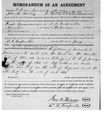
1866 Lease
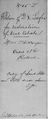
1865 Petition for Restoration of Property (page 1)
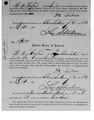
1865 Petition for Restoration of Property (page 2)
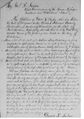
1865 Petition for Restoration of Property (page 3)

1865 Petition for Restoration of Property (page 4)

1865 Property Restoration

1865 Register of Land Titles

Register of Leased Plantations
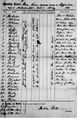
1865 Monthly Report to the Commission

1865 Consolidated Tri-monthly Report to the Commission
_Affidavit_DGS_7676444_658.jpg)
_Land_Grant_DGS_7676444_359.jpg)
_Lease_DGS_4139937_17.jpg)
_Petition_for_Restoration_of_Property_(page_1)_DGS_7676815_91.jpg)
_Petition_for_Restoration_of_Property_(page_2)_DGS_7676815_92.jpg)
_Petition_for_Restoration_of_Property_(page_3)_DGS_7676815_93.jpg)
_Petition_for_Restoration_of_Property_(page_4)_DGS_7676815_94.jpg)
_Property_Restoration_DGS_7676819_246.jpg)
_Register_of_Land_Titles_DGS_7676444_24.jpg)
_Register_of_Leased_Plantations_DGS_7630093_182.jpg)
_Monthly_Report_to_the_Commission_DGS_7630073_507.jpg)
_Consolidated_Tri-monthly_Report_to_the_Commission_DGS_7630073_403.jpg)
Record Types
The Bureau of Refugees, Freedmen, and Abandoned Lands (often called the Freedmen’s Bureau) created many different record types necessary to supervise relief efforts including education, health care, food and clothing, refugee camps, legalization of marriages, employment, labor contracts, and securing back pay, bounty payments and pensions. These records include letters and endorsements sent and received, account books, applications for rations, applications for relief, court records, labor contracts, registers of bounty claimants, registers of complaints, registers of contracts, registers of disbursements, registers of freedmen issued rations, registers of patients, reports, rosters of officers and employees, special and general orders and circulars received, special orders and circulars issued, records relating to claims, court trials, property restoration, and homesteads.
- The following link will provide a description of the record types found in this and other Freedmen’s Bureau collections. Freedmen's Bureau Record Types
Officer's Manual
The War Department published an Officer's Manual to assist bureau personnel in the records that were required to be keep in bureau offices.
The following Wiki articles are transcriptions of portions of the manual
- US, NARA, Freedmen's Bureau, Officer's Manual - I, Book Keeping and Official Correspondence
- US, NARA, Freedmen's Bureau, Officer's Manual - IV, Medical Department
- US, NARA, Freedmen's Bureau, Officer's Manual - V, Subsistence
- US, NARA, Freedmen's Bureau, Officer's Manual - VI, Miscellaneous Provisions - Includes Reports from Assistant Commissioners
Inventory
The search results in this collection will identify the National Archives microfilm publication that the indexed image is from along with the film, digital and image numbers. The United States, Freedmen's Bureau, Land and Property Records 1865-1872 Digital Folder Number List will help you determine the specific locality and provide the film notes which should identify the record type. Additional images of bureau records for the locality identified in the table will be found by searching in the browse collection.
Digital Folder Number List
This collection was published as a DGS browse collection. The list does not contain any description of the DGS folder's content. A table listing each DGS number and its contents can be found at the Digital Folder Number List.Collection Details
Location of Original Records
National Archives and Records Administration
"United States, Freedmen's Bureau, Land and Property Records, 1865-1872." Database with images. FamilySearch. http://FamilySearch.org : accessed 2026. Citing various NARA microfilm publications. Washington, D.C.: National Archives and Records Administration.
