
United States, Freedmen's Bureau Records of Persons and Articles Hired, 1865-1872
Index and images of monthly reports of articles and persons hired by the Bureau's field office. The principal name in the index is either of the person employed or the person who owned the article. The Bureau of Refugees, Freedmen, and Abandoned Lands (often called the Freedmen’s Bureau) was created in 1865 at the end of the American Civil War to supervise relief efforts including education, health care, food and clothing, refugee camps, legalization of marriages, employment, labor contracts, and securing back pay, bounty payments and pensions.
Start your search
United States, Freedmen's Bureau Records of Persons and Articles Hired
What is in This Collection?
This collection consists of index & images of field office monthly reports of articles and persons hired by the Bureau's field office for the years 1865 to 1872. The principal name in the index is either of the person employed or the person who owned the article.
"The Receiving and Disbursing Officer of each District will make a consolidated Monthly Report [Form 2] of all employees of this Bureau in their respective Districts, giving the name of each officer employing the persons whose services are reported. These names will be entered in the column headed "By whom owned," the words "or employed" being entered in said heading. The several officers under whose direction employees are hired will make their Reports (Form 2) to the Assistant Commissioners of their respective Districts as heretofore . These reports when approved by the Assistant Commissioners, will be by them referred to the Receiving and Disbursing Office reporting to them respectively, for consolidation." Source: Officers' Manual, p. 28.
To locate additional information on the indexed collections in this publication see the United States, Freedmen's Bureau Records of Persons and Articles Hired Digital Folder Number List.
The records and roll numbers are from the field office records of the following states:
- Alabama, Freedmen's Bureau Field Office Records, 1865-1872 Quartermaster and disbursing officer, roll 7
- Arkansas, Freedmen's Bureau Field Office Records, 1864-1872 Batesville, roll 6; Devall's Bluff, roll 8; Pine Bluff, Arkansas River District, roll 19
- District of Columbia, Freedmen's Bureau Field Office Records, 1863-1872 Washington and Georgetown, roll 17
- Georgia, Freedmen's Bureau Field Office Records, 1865-1872 Chief quartermaster and disbursing officer, rolls 21-24; Isabella, roll 65; Woodville, roll 90
- Kentucky, Freedmen's Bureau Field Office Records, 1865-1872 Bowling Green, roll 91; Lexington, rolls 110-111; Louisville, roll 119; Maysville, roll 124; Paducah, roll 131
- Louisiana Freedmen's Bureau Field Office Records, 1865-1872 Chief medical officer, roll 15; Abbeville, roll 52; Alexandria, roll 54; Amite City, roll 58; Abbeville, roll 60; Bayou Sara, roll 66; Clinton, roll 69; Columbia, roll 71; Franklin, roll 77; Houma rolls 80, 82; Lake Providence, roll 82; Milliken Bend, roll 87; Natchitoches, roll 92; New Iberia, roll 95; New Roads, roll 97; St. Joseph, roll 99
- Maryland and Delaware, Freedmen's Bureau Field Office Records, 1865-1872 roll 6
- Mississippi, Freedmen's Bureau Field Office Records, 1865-1872 Macon, roll 29; Vicksburg, roll 44 and 64
- North Carolina, Freedmen's Bureau Field Office Records, 1863-1872 Beaufort, roll 6; Charlotte, roll 8; Greensboro, roll 20; Oxford, roll 48
- South Carolina, Freedmen's Bureau Field Office Records, 1865-1872 Medical officer, roll 13; Abbeville Courthouse, roll 33; Aiken, roll 37; Beaufort, roll 57; Columbia, roll 70; Darlington, roll 72; Georgetown, roll 75; Kingstree, roll 85; Marion, roll 87
- Texas, Freedmen's Bureau Field Office Records, 1865-1870 Quartermaster and disbursing officer rolls 7-9; Boston roll 13
General Information about the Freedmen's Bureau
The Bureau of Refugees, Freedmen, and Abandoned Lands (often called the Freedmen’s Bureau) was created in 1865 at the end of the American Civil War to supervise relief efforts including education, health care, food and clothing, refugee camps, legalization of marriages, employment, labor contracts, and securing back pay, bounty payments and pensions. The Bureau of Refugees, Freedmen, and Abandoned Lands was established in the War Department in March of 1865. It was commonly called the Freedman’s Bureau and was responsible for the management and supervision of matters relating to refuges, freedmen, and abandoned lands. The Bureau assisted disenfranchised Americans, primarily African Americans, with temporal, legal and financial matters, with the intent of helping people to become self-sufficient. Matters handled included the distributing of food and clothing; operating temporary medical facilities; acquiring back pay, bounty payments, and pensions; facilitating the creation of schools, including the founding of Howard University; reuniting family members; handling marriages; and providing banking services. Banking services were provided by the establishment of the Freedman’s Saving and Trust Company, or Freedman’s Bank.
The Bureau functioned as an agency of the War Department from approximately June 1865 until December 1868. In 1872, the functions of the Bureau were transferred to the Freedmen’s Branch of the Adjutant General’s Office. The Bureau assisted over one million African Americans, including many of the nearly four million emancipated slaves, which was over 25% of the population of former slaves in America. The records identify those who sought help from the Bureau at the end of the Civil War. Most supplicants were freed slaves, some of which were military veterans. In addition, a few veterans who were not African Americans also sought help from the Bureau. Freedmen’s Bureau records are usually reliable, because the records were supplied through first-person correspondence or the recording of a marriage.
National Museum of African American History & Culture
The museum is working with the Smithsonian Transcription Center and volunteers to transcribe the records of the Bureau.
- Freedmen's Bureau Transcription Project.
- About The Freedmen's Bureau Database Records
- FREEDMEN'S BUREAU ABBREVIATIONS, STAFF ROSTERS, AND STYLE SHEETS
- Freedmen's Bureau - Browse Projects
Additional records and/or images may be added to this collection in the future.
What Can These Records Tell Me?
The following information may be found in this collection:
- Full name
- Residence
- Document dates
- Age
- Occupation
- Names of family members
- Relationships
Collection Content
Sample Images

1867 Bill of Lading

1866 Employment Record (sample 1)

1867 Employment Record (sample 2)
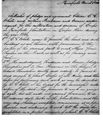
1866 Labor Contract (page 1)

1866 Labor Contract (page 2)

1866 Labor Contract (page 3)

1866 Labor Contract (page 4)

1868 Record of Liens on Crops

1866 Register of Sick and Wounded
_Bill_of_Lading_DGS_5681789_343.jpg)
_Employment_Record_(sample_1)_DGS_7630103_210.jpg)
_Employment_Record_(sample_2)_DGS_7630103_439.jpg)
_Labor_Contract_(page_1)_DGS_7492071_301.jpg)
_Labor_Contract_(page_2)_DGS_7492071_302.jpg)
_Labor_Contract_(page_3)_DGS_7492071_303.jpg)
_Labor_Contract_(page_4)_DGS_7492071_304.jpg)
_Record_of_Leins_on_Crops_DGS_7492081_485.jpg)
_Register_of_Sick_and_Wounded_DGS_7492071_174.jpg)
Digital Folder Number List
This collection was published as a DGS browse collection. The list does not contain any description of the DGS folder's content. A table listing each DGS number and its contents can be found at United States, Freedmen's Bureau Records of Persons and Articles Hired Digital Folder Number List.Collection Details
Location of Original Records
National Archives and Records Administration
"United States, Freedmen's Bureau Records of Persons and Articles Hired, 1865-1872." Database with images. FamilySearch. http://FamilySearch.org : accessed 2026. Citing various NARA microfilm publications. Washington, D.C.: National Archives and Records Administration.
